


The regulatory landscape in South Africa is undergoing a structural shift. Following President Cyril Ramaphosa’s national address on migration, it is clear that the government is moving away from passive enforcement toward a coordinated crackdown on immigration and labour law violations.
With the state committing to the deployment of an additional 10,000 labour inspectors, business leaders can no longer view immigration governance solely as a government function. It is a shared constitutional and operational responsibility where every individual and every business has a definitive role to play in upholding the rule of law.
The Operational Threat of Non-Compliance
For businesses, the risks of inadequate oversight extend beyond simple administrative fines. The modern enforcement framework targets systemic corporate accountability:
- Surprise audits can lead to immediate workforce depletion or interrupted operations.
- State policy has explicitly moved toward harsh penalties and potentially prosecuting employers who fail to comply.
- Being implicated in exploitative practices or regulatory breaches can damage business relationships.
The Rule of Law
As noted in Lunga Dweba’s recent analysis shared on LinkedIn, balanced migration governance through established legal and policy frameworks should be applied without exception. This principle is codified internationally, from the 1951 Refugee Convention to our national legislative frameworks.
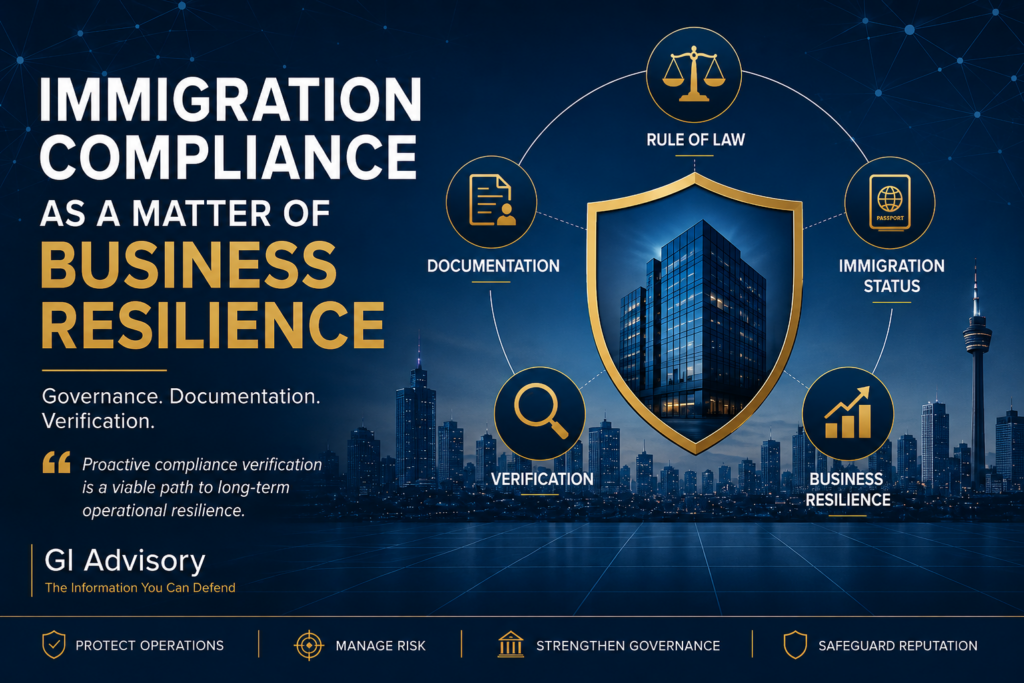
For the private sector, upholding the rule of law means ensuring that every layer of the company operates with transparency. It requires moving away from passive trust to active compliance as part of good governance and risk management practices.
A Path Forward
In an environment defined by shifting geopolitical dynamics and heightened regulatory scrutiny, waiting for an inspector to knock on the door would not be wise. Proactive compliance verification is a viable path to long-term operational resilience.
_______________________________________________________________________
GI Advisory provides open-source intelligence, corporate risk assessments, and investigative due diligence to support informed organizational decision-making. We do not provide statutory legal interpretations. Where uncertainty exists regarding employee documentation, visa eligibility, or specific statutory compliance obligations, businesses are strongly encouraged to seek guidance from qualified immigration professionals.